Mobile dust suppression, portable diesel bowsers and Heras fencing handling equipment — designed for the environmental, safety and operational demands of UK demolition and site clearance projects. Moved by your excavator. No mains water. No chains. Built by people who've been on demolition sites.
Built from Demolition Experience
"Running my own demolition company, dealing with plant, fuel, breakdowns and all the day-to-day chaos, I got fed up with kit that was badly designed and not built for real industry." — Jordan, Co-Founder, MW Equipment LTD. MW Equipment was born from demolition. Our products are shaped by the frustrations of contractors who had lived them.
Demolition sites are among the most operationally complex and hazardous environments in the built environment sector. High dust concentrations, extensive plant fleets, rapidly changing site layouts and strict environmental oversight create unique demands that standard site equipment wasn't designed to meet.
Mechanical demolition generates dust at extreme concentrations. Concrete breaking, crushing and bulk arisings create respirable crystalline silica (RCS) — a hazardous substance with a legal workplace exposure limit of just 0.1 mg/m³. Dry concrete cutting without controls can generate silica dust at 10–50 times that limit. Mains water connections are rarely available across a demolition footprint.
Active demolition sites generate rubble, contaminated arisings and unstable ground conditions. Crushers, screeners, excavators with demolition attachments and plant breakers all require regular refuelling. Tow bowsers can't navigate safely across demolition rubble, and ground conditions often preclude safe towing altogether.
CDM requires demolition exclusion zones and site perimeter security fencing. As the demolition sequence progresses, these exclusion zones change with it — requiring repeated manual handling of Heras panels across a site that may be contaminated, unstable or hazardous. A task that injures construction workers at very high rates.
Three MWE products address the core operational challenges of demolition and site clearance. All are moved by your existing excavator, forklift or telehandler — making them practical on the challenging ground conditions demolition sites produce.
Demolition is the period within a construction project with the highest potential to create dust. Unlike construction, where dust can often be managed with boundary controls, mechanical demolition generates dust at extreme concentrations directly at the point of activity — requiring active suppression at source. The DustBag's 2,000L standalone tank means it operates independently of mains water across the entire demolition footprint, can be repositioned by excavator as each section of the structure comes down, and runs for up to 5 hours without refill. It's the practical alternative to mains-connected hose systems that can't follow the work front.
Coming Soon
DustBag
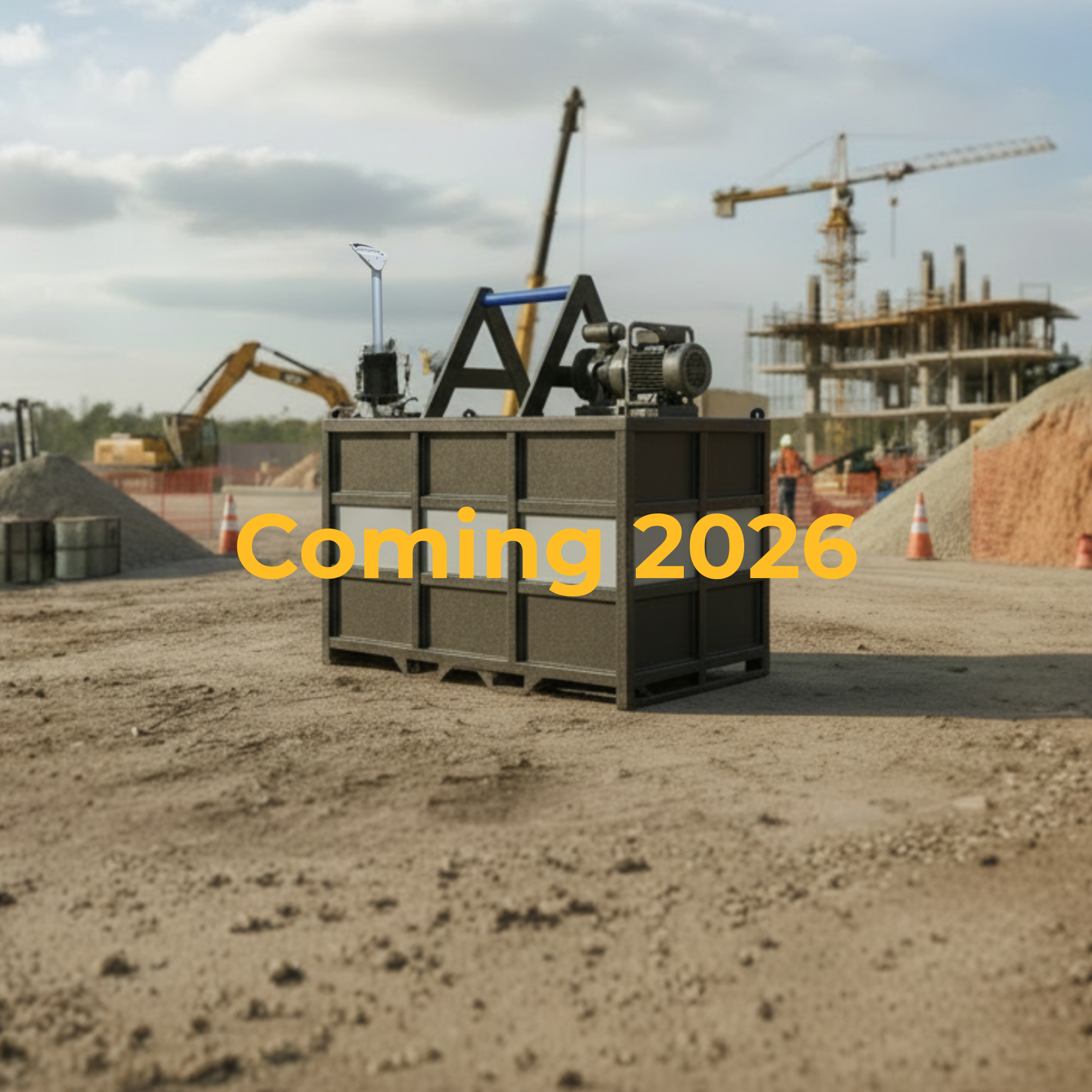
Mobile Dust Suppression — Standalone, No Mains
A self-contained mobile dust suppression unit with a 2,000L integrated water tank — requiring no mains water connection, no hoses trailing across the demolition site, and no fixed infrastructure. A 180° oscillating cannon delivers targeted water mist at source. Up to 5 hours continuous operation per fill. Repositioned anywhere on the demolition footprint by excavator in minutes.
Demolition & Site Clearance Use Cases
Available Now
FuelBag
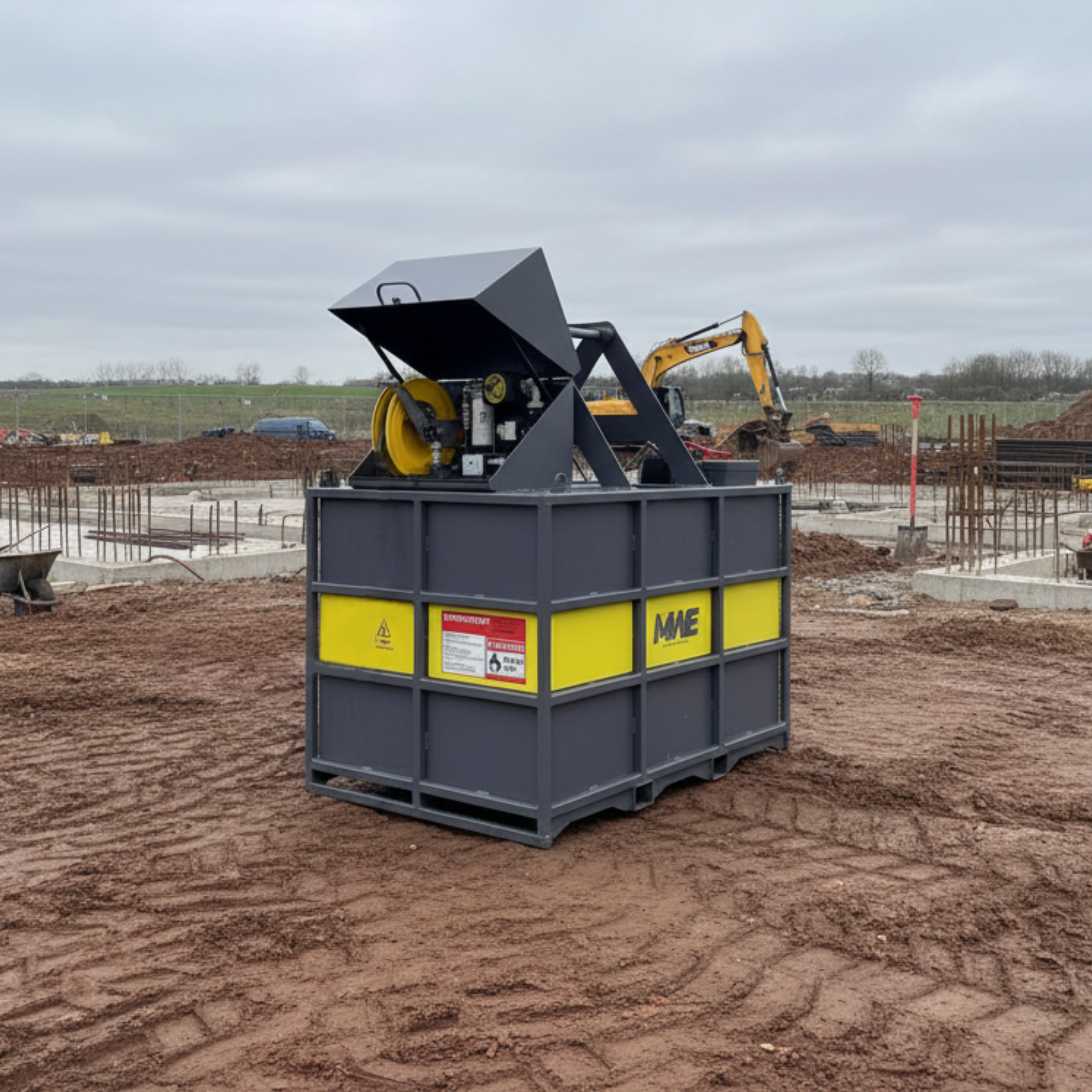
Portable Diesel Bowser — Moved by Your Excavator
A 2,000L fully bunded portable diesel bowser for fuelling demolition plant — crushers, screeners, excavators with demolition attachments and static generators. Relocated by excavator across rubble-strewn and contaminated ground without a tow vehicle. COSHH and Environment Agency PPG26 compliant as standard. No chains. No tow. No secondary machine.
Demolition & Site Clearance Use Cases
Coming Soon
FenceBag
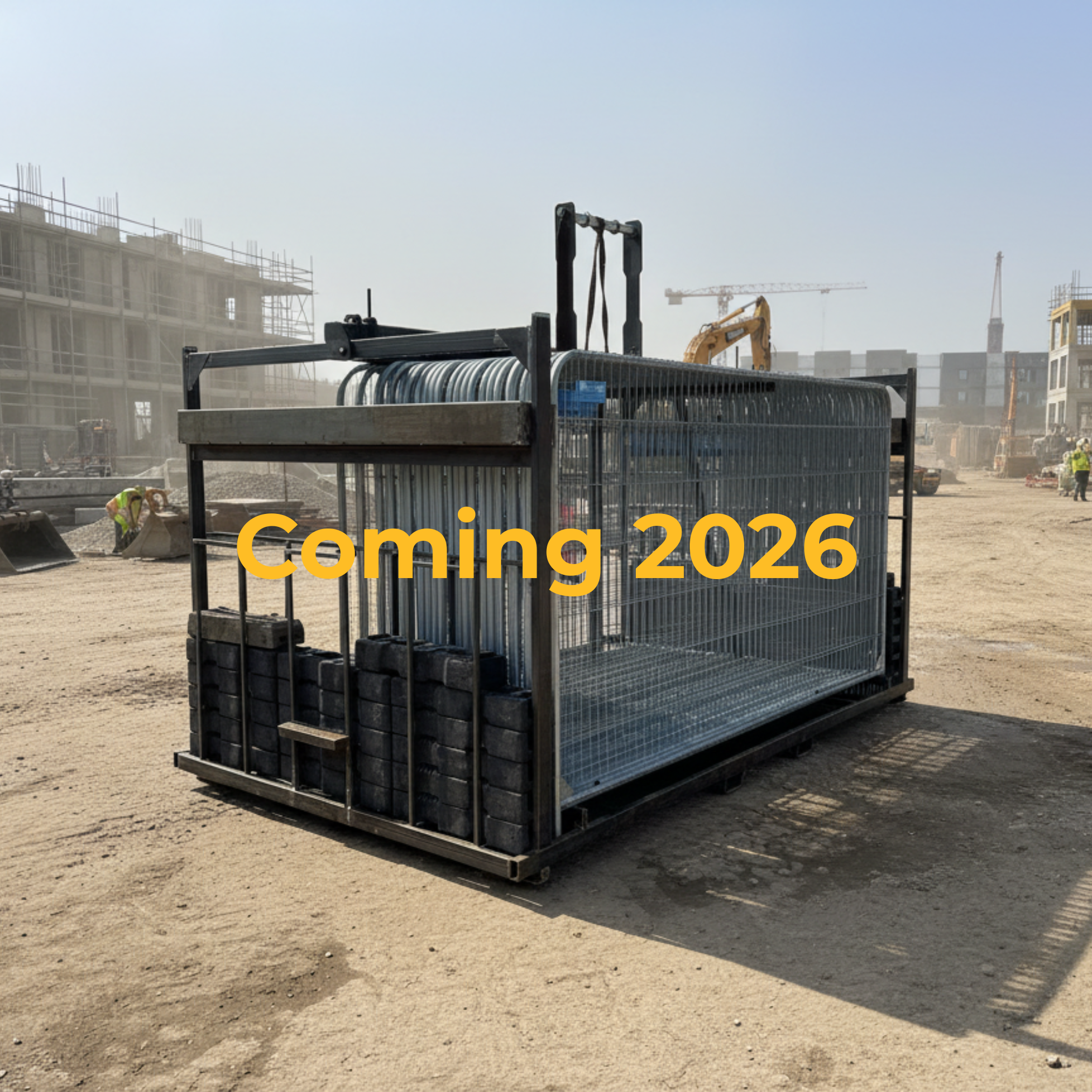
Exclusion Zone Fencing — Lift & Relocate 54 Panels
The FenceBag carries up to 54 UK-standard Heras security fence panels as a single load, lifted and positioned by excavator, telehandler or crane. On demolition sites where exclusion zones shift with every phase of work, the FenceBag eliminates the manual carrying of individual panels across contaminated, unstable and hazardous ground.
Demolition & Site Clearance Use Cases
The health and safety risks of demolition dust are well-documented — and legally enforceable. These are the numbers behind why effective dust suppression is non-negotiable on demolition sites.
Data sourced from HSE EH40, HSE Construction Statistics 2024/25, and published silica dust guidance. View HSE silica guidance →
MW Equipment was co-founded by Jordan, who ran his own demolition company. The problems our products solve aren't theoretical — they're frustrations our founders experienced on demolition sites every day before building the solutions themselves.
The HSE is clear: dust must be controlled at source on demolition sites, not managed reactively once it has spread. The DustBag's oscillating cannon delivers targeted water mist directly to the point of dust generation — the crushing front, the breaking operations, the bulk arisings areas — not just boundaries.
Demolition sites rarely have reliable mains water across the site footprint. The DustBag's 2,000L integrated tank means it operates independently — relocating with the demolition front without needing a mains connection or a hose network trailing back to a standpipe.
Both the FuelBag and DustBag are lifted rather than towed — meaning they can be repositioned across demolition rubble, contaminated arisings and unstable ground by your existing excavator. No tow vehicle required. No getting stuck on difficult terrain.
Demolition sites are amongst the most hazardous places for manual handling injuries. The FenceBag and Easy-Lift System eliminate manual handling of panels across ground that may be contaminated, structurally compromised or littered with demolition arisings.
The DustBag supports CDM demolition dust control obligations and COSHH silica requirements. The FuelBag is fully bunded (COSHH / PPG26 compliant). ISO 9001:2015 and ISO 14001 certification documentation available for principal contractor H&S file submissions.
All MWE products are manufactured by UK-based ISO-certified partners. A complete range of genuine spare parts is held in stock for rapid supply — minimising downtime on a demolition programme where every day of delay has cost implications.
COSHH & Respirable Crystalline Silica (RCS)
Under the Control of Substances Hazardous to Health Regulations, employers must prevent or adequately control exposure to silica dust. The Workplace Exposure Limit for RCS is 0.1 mg/m³ as an 8-hour TWA. Mechanical demolition of concrete and masonry generates silica dust far above this limit without effective suppression. The DustBag provides standalone active suppression at source — the control method prioritised in HSE COSHH guidance for demolition dust.
CDM Regulations 2015 — Demolition Method Statement
CDM 2015 requires a Demolition Method Statement (DMS) addressing all significant health and safety risks, including dust. The DMS must demonstrate that dust will be controlled at source. A standalone mobile dust suppression unit that requires no mains water and follows the demolition front is a proportionate and practical solution to the dust control requirement documented in the DMS.
Environment Agency — Dust & Fuel Storage
Demolition on brownfield or contaminated sites often requires an Environment Agency environmental permit or exemption addressing dust and fuel storage. PPG26 guidance requires bunded fuel storage on site. The FuelBag is fully bunded to 110% capacity as standard. ISO 14001 certified manufacturing documentation can be provided to support permit applications and principal contractor requirements.
Certification Available
All MWE products are manufactured by partners operating to ISO 9001:2015 and ISO 14001. Certification documentation is available on request to support CDM health and safety files, Environment Agency permit submissions and principal contractor pre-qualification requirements.
View Accreditations →Under CDM Regulations 2015 and COSHH, demolition contractors must implement effective dust control — particularly for respirable crystalline silica (RCS). The WEL for silica is 0.1 mg/m³. Dust must be controlled at source. The MWE DustBag provides standalone mobile suppression with a 2,000L water tank and 180° oscillating cannon — requiring no mains water, relocatable by excavator anywhere on site, with up to 5 hours continuous operation.
Respirable crystalline silica (RCS) is a fine dust generated when concrete, brick, stone and mortar are broken, crushed or cut. On demolition sites, mechanical demolition creates RCS at extremely high concentrations — dry concrete cutting without controls can generate silica dust at 10–50 times the legal exposure limit. Long-term exposure causes silicosis, an incurable progressive lung disease. HSE estimates approximately 500 UK construction workers die every year from silica-related diseases.
The MWE FuelBag is a 2,000L fully bunded portable diesel bowser relocated by excavator — following crushing and screening plant around the site without a tow vehicle, even across demolition rubble and contaminated arisings. With an 80L/min pump and 8m retractable hose reel, it delivers fast, controlled refuelling without needing to move the plant itself.
Yes. CDM 2015 requires a Demolition Method Statement that addresses all significant health and safety risks — including dust. Principal contractors must demonstrate dust will be controlled at source and workers won't be exposed above the WEL for silica. The MWE DustBag — standalone, mobile, no mains water required — supports the dust control commitments that need to be documented in the DMS.
Three MWE products are directly relevant to demolition: the DustBag (standalone mobile dust suppression, CDM and COSHH support, no mains water), the FuelBag (2,000L bunded portable diesel bowser, moved by excavator across demolition rubble), and the FenceBag (Heras security fencing handler, eliminates manual panel handling on hazardous demolition ground). All feature the patented MW Easy-Lift System for chainless excavator relocation.
Ties the DustBag's standalone operation to CDM 2015 dust control requirements and Environment Agency environmental permit conditions — practical guidance for principal contractors.
Read article → Product GuideWhy a tow bowser doesn't work across demolition rubble — and how the FuelBag's excavator-compatible relocation changes on-site refuelling for demolition plant fleets.
Read article → SafetyHSE statistics on manual handling injuries in construction and demolition — and the case for mechanising tasks like fence panel handling and equipment relocation.
Read article →MW Equipment was founded by people who worked in demolition. Call or enquire today — we respond within one working day.